Chugach National Forest Travel Guide — Alaska
Our Chugach National Forest guide covers practical planning for Chugach National Forest Alaska — best time to visit, getting there, and what to do on the ground.
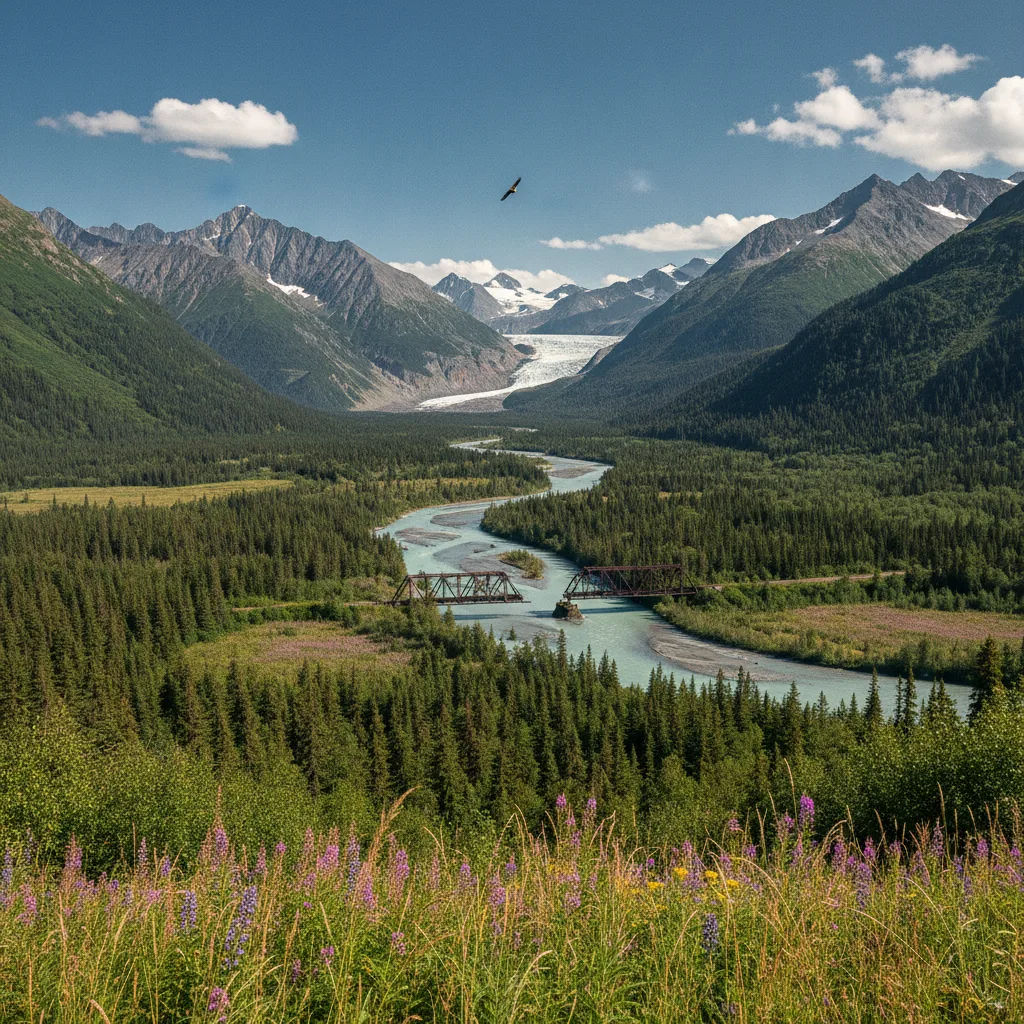
Encompassing nearly six million acres, the Chugach National Forest Alaska stands as the second-largest national forest in the United States, a true testament to Alaska's wild, untamed beauty. Stretching from the Kenai Peninsula across Prince William Sound to the Copper River Delta, this vast expanse offers an unparalleled diversity of landscapes, from towering tidewater glaciers and rugged coastlines to dense temperate rainforests and alpine tundra. It’s a place where wildlife thrives, and adventure awaits around every bend, making it a must-visit for any discerning traveler to the Last Frontier.
Why Visit Chugach National Forest
For those drawn to the raw power and serene beauty of nature, Chugach National Forest offers an experience unlike any other. We find ourselves continually captivated by its sheer scale and the incredible variety of environments it protects. Imagine kayaking through the calm, protected waters of Prince William Sound, past calving glaciers, or hiking through lush forests where moose and bears roam freely. This is a landscape shaped by ice and time, where 20 tidewater glaciers emerge from snowbound coastal ranges, with some peaks soaring two miles high.
Beyond its breathtaking scenery, the Chugach National Forest is a haven for outdoor recreation. With hundreds of miles of trails, abundant fishing opportunities, and a network of public use cabins, it invites visitors to truly immerse themselves in the Alaskan wilderness. Whether you're seeking solitude in a remote backcountry cabin or the thrill of spotting a Dall sheep on a mountainside, the Chugach delivers an authentic and unforgettable Alaskan adventure.
Who It's Best For
The Chugach National Forest caters to a wide spectrum of adventurers, from families seeking accessible outdoor experiences to seasoned backpackers craving remote wilderness. Our team believes it's an ideal destination for:
- **Nature Enthusiasts and Wildlife Watchers:** With abundant brown and black bears, moose, Dall sheep, and mountain goats, along with diverse birdlife, the forest provides exceptional wildlife viewing opportunities.
- **Hikers and Backpackers:** Over 500 miles of hiking trails, ranging from easy day hikes to multi-day treks, await.
- **Paddlers and Boaters:** Prince William Sound's calm waters are perfect for kayaking, canoeing, and boat tours to tidewater glaciers.
- **Anglers:** The Chugach is renowned for its fishing, especially the red salmon run on the Russian River in July and August.
- **Families:** Many campgrounds are easily accessible by road, and visitor centers like Begich-Boggs offer interactive exhibits and family-friendly activities.
However, those looking for extensive paved roads and highly developed tourist infrastructure might find parts of the Chugach National Forest to be more rugged than anticipated. Much of the forest is "roadless," requiring boat or aircraft access for many remote sites.
Getting There & Parking
Understanding how to get to Chugach National Forest is key to planning your adventure. This expansive forest is remarkably accessible, considering its remote feel, with multiple entry points depending on which region you aim to explore. Most first-time visitors will find their way to the Chugach from Anchorage, Alaska's largest city.
By Road
The most common way to access the western parts of the Chugach National Forest is via the Seward Highway, a designated National Scenic Byway. The forest officially begins about 35 miles south of Anchorage, near Girdwood, and continues along the northeastern Kenai Peninsula, including communities like Whittier, Moose Pass, Hope, and Seward. The Sterling Highway also provides access to portions of the forest on the Kenai Peninsula. For those venturing towards the Copper River Delta, the Copper River Highway from Cordova offers access to trails, campgrounds, and facilities.
Parking is generally available at trailheads and campgrounds throughout the forest. Many campgrounds are situated directly along the road system, making them convenient for both RV and tent campers. However, during peak season, popular trailheads can fill up quickly, so arriving early is always a good strategy.
By Rail
The Alaska Railroad offers a unique and scenic way to experience the Chugach National Forest. Several itineraries, including the Glacier Discovery trip, traverse parts of the forest, providing access to areas not reachable by road, such as the Spencer Glacier Whistle Stop. From Anchorage, a train trip to a Chugach National Forest stop like Spencer Glacier can take around 4 hours and 29 minutes.
By Boat or Air
For exploring the stunning Prince William Sound or accessing more remote public use cabins, boat and float plane access are essential. Gateway communities like Whittier, Valdez, and Cordova offer boat cruises to tidewater glaciers and other parts of the national forest. Charter air services in Seward and Cordova can also provide float plane transport to many Forest Service cabins, offering a truly immersive wilderness experience.
Ranger Stations and Visitor Centers
Before heading out, we highly recommend stopping at one of the Chugach National Forest's offices or visitor centers for up-to-date information on trail conditions, closures, and permits. The Chugach National Forest Supervisor's Office is in Anchorage (161 E. 1st Ave., Door 8, Anchorage, AK 99501), open Monday-Friday, 8 am to 4 pm. Ranger District offices are located in Cordova (612 Second St., open Monday-Friday, 8 am to 5 pm), Girdwood (Glacier Ranger District, 145 Forest Station Road, open Monday-Friday, 9 am to 5 pm), and Seward (Seward Ranger District, 33599 Ranger Station Spur, open Monday-Friday, 8 am to 4 pm).
The Begich-Boggs Visitor Center, located in Portage Valley, is open Memorial Day through Labor Day, Thursday through Sunday, 9 a.m. to 5 p.m. There is a $5 fee for adults, with children 15 and younger admitted free, which includes admission to the film and exhibits.
Top Things to Do
When considering things to do at Chugach National Forest, the options are as vast and varied as the landscape itself. Our team has curated a list of essential experiences that showcase the best of this Alaskan treasure.
Glacier Viewing and Exploration
The Chugach National Forest is home to numerous glaciers, many of which are easily accessible. A popular starting point is the Portage Glacier area, south of Anchorage via the Seward Highway. While Portage Glacier itself has retreated out of sight from the Begich-Boggs Visitor Center since 1994, visitors can still enjoy stunning views of Portage Lake and the surrounding mountains. Short boat cruises on Portage Lake provide close-up views of the glacier. For a more active experience, hike the Portage Pass Trail to see Portage Glacier. The Byron Glacier Trail and Trail of Blue Ice in Portage Valley also offer spectacular views of glaciers and alpine scenery, though always check for avalanche conditions, especially during active weather.
In Prince William Sound, consider a boat tour from Whittier or Valdez to witness tidewater glaciers calving into the sea, a truly awe-inspiring spectacle. The Childs Glacier Recreation Area near Cordova offers a boat-accessible campground and trails for glacier viewing.
Hiking and Backpacking
With over 500 miles of trails and 40 trailheads, the Chugach National Forest is a hiker's paradise. For a dedicated exploration of Chugach National Forest hiking trails, see our detailed section below. Beyond specific trails, the general opportunities for hiking are endless, from easy strolls to challenging multi-day treks. Many trails offer fantastic options for overnight backpacking trips.
Wildlife Viewing
Wildlife is abundant throughout the Chugach National Forest. Keep an eye out for brown and black bears, especially in late summer when they forage for salmon along streams and rivers. Record-size moose inhabit the Kenai Peninsula and Copper River Delta, while Dall sheep can be spotted on Kenai Peninsula mountainsides. Mountain goats frequent steep hillsides along Prince William Sound and the Copper River Delta. The Alaska Wildlife Conservation Center, located near the forest, offers guaranteed sightings of various Alaskan animals.
Fishing
The Chugach National Forest offers diverse fishing opportunities. Anglers can cast for rainbow, lake, and cutthroat trout, as well as Dolly Varden, Arctic grayling, and all five species of Pacific salmon. The Russian River on the Kenai Peninsula is particularly famous for its red salmon runs in July and August, drawing tens of thousands of anglers.
Paddling and Boating
The calm, protected waters of Prince William Sound are ideal for sea kayaking and boating, allowing you to explore numerous coves, bays, and waterfalls. Outfitters also offer raft trips on several rivers and creeks within the national forest, including the Kenai River and Sixmile Creek on the Kenai Peninsula.
Chugach National Forest Hiking Trails
Exploring the Chugach National Forest hiking trails is a highlight for many visitors, offering routes for all skill levels and showcasing the forest's diverse ecosystems. Our team recommends these popular trails:
- **Resurrection Pass Trail:** A renowned multi-day backpacking and mountain biking trail that can be linked with Russian Lakes and Resurrection River Trails for a 70-mile trek from Hope to Seward.
- **Johnson Pass Trail:** Another popular trail for both hiking and mountain biking, following a historic pioneer wagon trail.
- **Russian Lakes Trail:** Offers access to the famed Russian River fishery and its falls, providing opportunities to observe salmon runs and wildlife. An easy 2.3-mile (3.8 km) path leads to Russian River Falls.
- **Tonsina Creek Trail:** An easy 3.7-mile (5.9 km) route that guides you through a vibrant coastal rainforest to scenic creek and coastal views of Resurrection Bay. Be prepared for potentially muddy conditions and creek crossings without bridges, especially after rain.
- **Trail of Blue Ice:** An easy 3.9-mile (6.3 km) trail in Portage Valley, offering spectacular views of mountains and hanging glaciers, including Byron Glacier.
- **Primrose and Lost Lake Trail System:** A popular system on the Kenai Peninsula offering varied terrain and stunning views.
Always check current trail conditions with a ranger station before heading out, as weather and wildlife activity can impact accessibility and safety.
Best Time to Visit
The Chugach National Forest truly shines during the summer months, from late May through early September. Our team considers July and August to be particularly prime, offering the best weather for hiking, biking, fishing, and exploring. This is when daylight hours are longest, with nearly endless daylight in July, allowing for extended adventures.
- **Summer (June-August):** This is peak season for a reason. Temperatures are mild, all facilities are typically open, and the forest is alive with activity. It's the best time for salmon fishing, especially the famous red salmon run on the Russian River in July and August. Boat tours to glaciers are in full swing, and hiking trails are generally clear of snow, though some high-elevation trails might retain snow into early summer. Festivals like the Forest Fair in Girdwood (July 3-5, 2026) and the Bear Paw Festival in Eagle River (July 8-12, 2026) add to the vibrant atmosphere in Southcentral Alaska.
- **Spring (May) and Fall (September):** These shoulder seasons offer a quieter experience with fewer crowds. In May, snowmelt can make some trails muddy, but wildflowers begin to bloom. September brings crisp air and the stunning colors of autumn foliage, though services may start to scale back. Wildlife viewing can be excellent in both spring and fall as animals are often more active.
- **Winter (October-April):** While many facilities close, the Chugach National Forest transforms into a winter wonderland for snowshoeing, cross-country skiing, and ice climbing. Avalanche danger is a significant concern during winter, so always check conditions and exercise extreme caution.
Regardless of when you visit, we advise checking current conditions, weather forecasts, and any alerts with the Chugach National Forest offices before your trip.
Where to Stay Nearby
Finding suitable Chugach National Forest lodging options is straightforward, whether you prefer rustic camping under the stars or a comfortable hotel base. The forest itself offers a range of accommodations, and nearby communities provide additional choices.
Camping in Chugach National Forest
The Chugach National Forest boasts 57 campgrounds, offering diverse settings from developed sites with amenities to primitive backcountry spots. Many campgrounds are located along the road system on the Kenai Peninsula, making them easily accessible for RVs and tents. Popular options include:
- **Russian River Campground:** Highly recommended for anglers due to its location on the famed salmon fishery.
- **Childs Glacier Recreation Area and Campground:** Offers spectacular views of two nearby glaciers and the historic Million Dollar Bridge, accessible by boat or air from Cordova.
- **Williwaw Campground:** Features 60 sites suitable for large motorhomes and provides excellent access to the Trail of Blue Ice.
- **Bertha Creek Campground:** A small, quaint campground with 12 sites, ideal for tents and small RVs, located at the base of steep mountains.
- **Porcupine Campground:** Popular with families, set in a birch forest overlooking Turnagain Arm and close to the historic village of Hope.
Many campgrounds operate on a first-come, first-served basis, but riverside spots during summer salmon runs are highly sought after. Dispersed camping is also permitted on US Forest Service roads, though these areas lack facilities.
Public Use Cabins
For a more rustic yet sheltered experience, the Chugach National Forest offers over 40 public use cabins scattered throughout scenic locations. These cabins are a local favorite and book up quickly, especially those with easier access. Reservations can be made up to 180 days in advance through Recreation.gov or by calling 1-877-444-6777. Examples include Porcupine Cabin ($75 per night) near Hope, which accommodates up to eight guests and offers views of Turnagain Arm. Other cabins like Barber Cabin are also $75 per night. Be aware that many cabins are remote and may only be accessible by boat or float plane. Guests typically need to bring their own sleeping bags, cooking gear, water, and firewood.
Hotels and Lodges Near Chugach National Forest
If you prefer more amenities, numerous hotels and lodges are available in the communities surrounding the Chugach National Forest, serving as excellent launching pads for your adventures. Prices for lodging near Chugach National Forest can range from $143 to $694 per night, depending on location, season, and amenities.
- **Girdwood:** Home to Alyeska Resort, a 4-star luxury option with an indoor pool, spa, and ski-in/ski-out access, surrounded by seven glaciers.
- **Seward:** Offers various hotels and vacation rentals, including family-friendly options like Seward House - Lost Lake, which provides kitchens and proximity to hiking trails.
- **Valdez:** Provides hotels such as Best Western Valdez Harbor Inn and various cabins and vacation rentals with ocean and mountain views.
- **Whittier:** June's Whittier Condo Suites offer excellent views of the water, harbor, and mountains.
- **Cooper Landing:** Features charming cabin rentals surrounded by the forest, often with modern amenities and close to attractions like Kenai Fjords National Park.
For more options across the state, be sure to check out our guide to the Best places in Alaska.
Sample 2-Day Itinerary
To help you make the most of your visit to Chugach National Forest, our team has crafted a sample two-day itinerary focusing on accessible highlights from the Anchorage area.
Day 1: Glaciers and Trails in Portage Valley
- **Morning (9:00 AM):** Start your day by driving south from Anchorage on the scenic Seward Highway. Your first stop is the Begich-Boggs Visitor Center in Portage Valley. Spend an hour exploring the interactive exhibits and learning about the ecosystems of Portage Valley and Prince William Sound. Remember, there's a $5 fee for adults.
- **Late Morning (11:00 AM):** Take a short boat cruise on Portage Lake to get a close-up view of Portage Glacier. Alternatively, hike the easy Trail of Blue Ice (3.9 miles, 1 hour 41 minutes) for stunning views of mountains and hanging glaciers, including Byron Glacier.
- **Afternoon (2:00 PM):** Enjoy a picnic lunch amidst the stunning scenery. Afterwards, consider a hike on the Byron Glacier Trail, but always check current avalanche conditions.
- **Evening (6:00 PM):** Head to a nearby campground like Williwaw Campground or Black Bear Campground in Portage Valley, both offering easy access to trails and scenic settings. Pitch your tent and enjoy the long Alaskan summer evening.
Day 2: Kenai Peninsula Exploration
- **Morning (8:00 AM):** After breakfast at your campsite, drive towards the Kenai Peninsula. Your destination is the Russian River area, famous for its salmon runs.
- **Late Morning (10:00 AM):** Hike the Russian River Falls Trail (easy, 2.3 miles, 1 hour 15 minutes) to witness salmon navigating the falls, especially if you're visiting in July or August. This is a prime spot for wildlife viewing.
- **Afternoon (1:00 PM):** Enjoy lunch in Cooper Landing or pack a picnic to enjoy by Kenai Lake. Consider a guided fishing trip on the Kenai River if you're an angler, or rent a kayak for a leisurely paddle on one of the many lakes.
- **Late Afternoon (4:00 PM):** Explore the historic town of Hope, a charming gold rush-era village. You can hike to Gull Rock or simply soak in the atmosphere.
- **Evening (6:00 PM):** Head back towards Anchorage or consider staying in a public use cabin or campground near Hope, such as Porcupine Campground.
Is It Worth Visiting?
The question "is Chugach National Forest worth visiting?" is one we can answer with an unequivocal yes. As an independent US travel authority, our team has explored countless destinations, and the Chugach National Forest consistently stands out as a truly exceptional place. Its immense scale, encompassing nearly six million acres, means there's an endless array of experiences to be had, from the dramatic fjords and tidewater glaciers of Prince William Sound to the salmon-rich rivers of the Kenai Peninsula.
The forest's geographic diversity is unique, offering everything from temperate rainforests to alpine tundra, all within a relatively accessible reach of Alaska's population centers. Whether you're drawn to challenging hikes, serene kayaking, world-class fishing, or simply the opportunity to witness Alaska's iconic wildlife in its natural habitat, the Chugach delivers. It's a place that fosters a deep connection with the wilderness, offering both thrilling adventures and peaceful solitude. For anyone planning a trip to Alaska, we firmly believe that the Chugach National Forest should be high on your list of destinations.
Last updated: 2026-07-05 by the Roam States team.