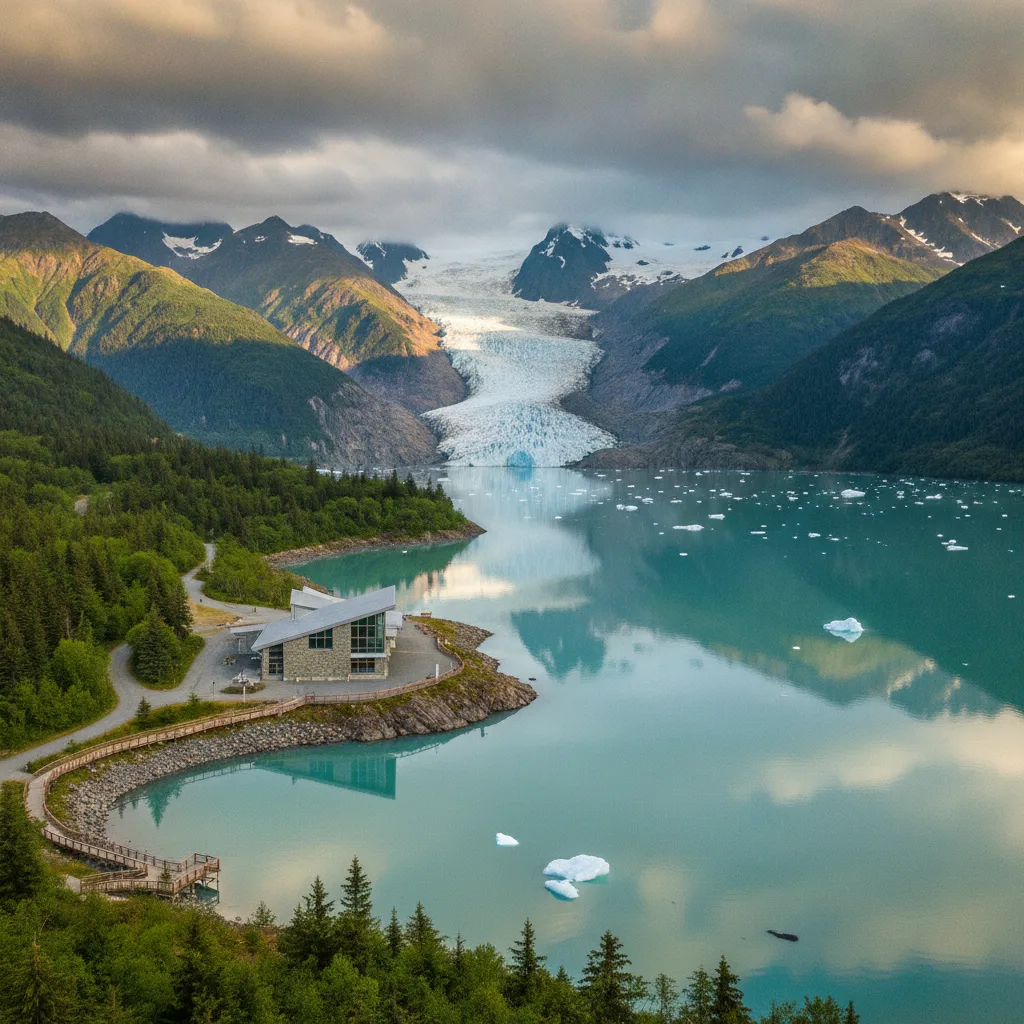
Our Portage Glacier & Begich Boggs Visitor Center guide covers practical planning for Portage Glacier & Begich Boggs Visitor Center Alaska — best time to visit, getting there, and what to do on the ground.
Portage Glacier & Begich Boggs Visitor Center Travel Guide — Alaska
Alaska's Chugach National Forest is a land of dramatic landscapes, and at its heart lies the stunning Portage Valley, home to the iconic Portage Glacier and Begich Boggs Visitor Center Alaska. While the glacier itself has retreated significantly over the past century, the valley remains a vibrant testament to glacial power, offering visitors a unique blend of educational exhibits, breathtaking scenery, and abundant outdoor activities. Our team at Roam States has explored this remarkable destination extensively, and we’re here to share our expert insights to help you plan an unforgettable trip to this easily accessible corner of the Last Frontier.
The Begich Boggs Visitor Center, built on the terminal moraine left by Portage Glacier, serves as the gateway to understanding this dynamic environment. Here, you'll discover engaging exhibits on glaciology, local ecosystems, and the profound impact of the 1964 earthquake that reshaped the region. Though the glacier is no longer visible from the visitor center's windows, boat tours still operate on Portage Lake, providing an unparalleled opportunity to witness the glacier's active face from a safe distance. Beyond the visitor center, the valley unfolds into a scenic wonderland, crisscrossed by numerous hiking trails that invite exploration of its towering mountains, hanging glaciers, and diverse wildlife. Whether you're a seasoned adventurer or a family seeking an accessible Alaskan experience, Portage Glacier and its surrounding valley promise a journey filled with wonder and discovery.
Why Visit Portage Glacier & Begich Boggs Visitor Center
A visit to Portage Glacier & Begich Boggs Visitor Center offers a multifaceted Alaskan experience that goes far beyond simply seeing a glacier. We believe it's a vital stop for anyone traveling through Southcentral Alaska, primarily due to its accessibility and the depth of experiences it provides. First and foremost, the Begich Boggs Visitor Center itself is a hub of knowledge. Its state-of-the-art exhibits delve into the fascinating science of glaciers, detailing their formation, movement, and the dramatic retreat of Portage Glacier over time. You can even touch a real chunk of glacial ice, a tangible connection to this icy world.
Beyond the educational aspects, the natural beauty of Portage Valley is simply unparalleled. Surrounded by towering peaks, many adorned with their own hanging glaciers, the valley is a photographer's dream. The serene Portage Lake, often dotted with icebergs calved from the glacier, provides a stunning foreground to these majestic backdrops.
Moreover, the area is a haven for wildlife viewing. Moose are a common sight, and if you're lucky, you might spot black or brown bears, mountain goats, or lynx. The Williwaw Fish Viewing Platform offers a chance to see spawning salmon in mid-to-late summer, adding another layer of natural wonder to your visit. It's an ideal location to experience the raw, untamed beauty of Alaska without venturing deep into the wilderness, making it perfect for those with limited time or accessibility concerns.
Who It's Best For
The Portage Glacier & Begich Boggs Visitor Center is a remarkably versatile destination, appealing to a wide array of travelers. Our team finds it particularly well-suited for families with children, as the visitor center's interactive exhibits and the accessible nature of many trails make learning about glaciers and Alaskan wildlife engaging for all ages. Children 15 and younger even enjoy free admission to the exhibits. The one-hour boat tour on Portage Lake is also a family-friendly activity, providing close-up glacier views without strenuous effort.
Hikers of all skill levels will find trails to suit their preferences, from easy, paved paths like the Trail of Blue Ice to more challenging routes like the Portage Pass Trail. Nature enthusiasts and photographers will be captivated by the dramatic landscapes, the opportunity to spot diverse wildlife, and the ever-changing light on the glaciers and mountains. Even those primarily interested in history and geology will appreciate the visitor center's deep dive into the region's past, including the devastating 1964 earthquake and the ongoing story of glacial retreat. It's also an excellent choice for travelers seeking an easily accessible Alaskan experience, as it's a straightforward drive from Anchorage and offers numerous activities within a concentrated area. This makes it a perfect day trip or a convenient stop on a longer Alaskan adventure, perhaps on your way to Kenai Fjords National Park.
Getting There & Parking
Getting to Portage Glacier & Begich Boggs Visitor Center is part of the scenic adventure itself. The valley is conveniently located approximately 50 miles south of Anchorage, a drive that typically takes about an hour, though we recommend allowing extra time to stop and admire the breathtaking scenery along the Seward Highway, particularly the Turnagain Arm. The drive along the Seward Highway is renowned as one of the most picturesque in the United States, offering opportunities to spot beluga whales during high tide and Dall sheep on the cliffs near Windy Corner.
To reach the visitor center, you'll turn east onto Portage Glacier Road at milepost 78.9 of the Seward Highway. This 5-mile road winds past several campgrounds before arriving at the Begich Boggs Visitor Center. For those wondering how to get to Portage Glacier & Begich Boggs Visitor Center without a car, bus and train services are available from Anchorage to Portage, though driving offers the most flexibility for exploring the valley.
Once you arrive at the Begich Boggs Visitor Center, you'll find ample parking available. While there are no specific parking fees mentioned for the general area, there is an admission fee of $5 for adults to access the exhibits and film inside the visitor center, with children 15 and under entering for free. Interagency Passes are honored and will cover the pass holder and three guests. We always advise arriving early, especially during peak summer months, to secure the best parking spots and to avoid crowds at the visitor center and boat tour departures. Also, be aware of a potential landslide warning for Portage Lake; recreationists should remain vigilant and prepared to evacuate.
Top Things to Do
When planning your visit, you'll find a wealth of things to do at Portage Glacier & Begich Boggs Visitor Center, catering to various interests and activity levels. Our team recommends starting your exploration at the Begich Boggs Visitor Center itself. Here, you can immerse yourself in the award-winning exhibits that detail the area's glaciology, wildlife, and the profound impact of the 1964 earthquake. Don't miss the opportunity to touch a piece of glacial ice or watch the interpretive film, "Retreat and Renewal: Stories from Alaska's Chugach National Forest."
The absolute best way to experience Portage Glacier up close is by taking a narrated boat tour on Portage Lake. The MV Ptarmigan, the only boat permitted to operate on the lake, offers one-hour cruises that take you within 300 feet of the glacier's active face. These tours run multiple times daily from late-May through early September (specifically May 11 through September 16, 2026), with adult tickets priced at $59, children (2-12) at $49, and seniors/military at $53.10. This is one of the quintessential things to do at Portage Glacier & Begich Boggs Visitor Center, offering stunning photo opportunities and the chance to witness calving ice.
Beyond the boat tour and visitor center, the Portage Valley is a paradise for outdoor enthusiasts. You can explore several hiking and biking trails, ranging from easy strolls to more challenging treks. The Trail of Blue Ice is a popular multi-use path, while the Byron Glacier Trail offers a relatively flat walk to another impressive glacier. For a unique perspective, consider driving through the Anton Anderson Memorial Tunnel to Whittier and hiking the Portage Pass Trail for head-on views of Portage Glacier. Don't forget to keep an eye out for wildlife, including moose and various bird species, throughout the valley.
Best Time to Visit
Determining the best time to visit Portage Glacier & Begich Boggs Visitor Center largely depends on what you hope to experience, but for most travelers, we highly recommend the summer months. The Begich Boggs Visitor Center is typically open daily from Memorial Day Weekend through Labor Day, with specific hours from Thursday through Sunday, 9 a.m. to 5 p.m. This period offers the warmest weather, the longest daylight hours, and full access to all facilities and activities.
During summer, the MV Ptarmigan boat tours to Portage Glacier operate frequently, usually five times a day from late-May to mid-September (May 11 through September 16, 2026). The hiking trails are also clear of snow and most accessible during this time, allowing for full exploration of the valley's natural beauty. Mornings are often calmer on Portage Lake, which can enhance the boat tour experience and provide better photo opportunities.
While summer is peak season, offering vibrant green landscapes and active wildlife, it also means more visitors. If you prefer fewer crowds, consider visiting in late May or early September. The shoulder seasons can offer a quieter experience, though some services or tours might have reduced schedules. Winter brings a completely different, stark beauty. Once Portage Lake freezes solid, adventurous individuals can ski, hike, ice skate, or bike approximately three miles across the ice to view Portage Glacier, though this is considered a backcountry trip with no official safety monitoring. Regardless of the season, always be prepared for changing Alaskan weather conditions; packing layers and rain gear is always a good idea.
Where to Stay Nearby
While there isn't extensive lodging directly at Portage Glacier & Begich Boggs Visitor Center, the surrounding areas offer a range of excellent options to suit different preferences and budgets. Our team suggests considering accommodations in nearby Girdwood, Whittier, or even Anchorage, depending on your itinerary.
For those seeking convenience and a resort experience, Girdwood is an excellent choice, located about 12 miles north of Portage Valley. Here, you'll find the luxurious Alyeska Resort, offering ski-in/ski-out access in winter and a full-service spa and restaurants year-round. Other options in Girdwood include Carriage House Accommodations, Christina Cabin, and Timberline Getaway, which provide cozy lodges and cabins, often with easy access to hiking and biking trails.
If you're interested in exploring Prince William Sound, Whittier, accessible via the Anton Anderson Memorial Tunnel from Portage Glacier Road, offers the Inn at Whittier and Glacier View Condo Suites. Staying in Whittier allows for early access to glacier and wildlife cruises into Prince William Sound. For those who prefer camping, the Portage Glacier & Begich Boggs Visitor Center area has two U.S. Forest Service campgrounds: Black Bear Campground (ideal for tent campers, no reservations) and Williwaw Campground (suited for RVs, popular in summer). These campgrounds offer a more immersive nature experience right in Portage Valley. For a unique, rustic stay, the Portage Glacier Lodge offers a cafe and RV hookups on a first-come, first-served basis. Further afield, Moose Pass offers options like Trail Lake Lodge and Inn at Tern Lake, providing an authentic Alaskan retreat. No matter where you choose for your Portage Glacier & Begich Boggs Visitor Center lodging, we recommend booking well in advance, especially during the peak summer season.
Sample 2-Day Itinerary
To help you make the most of your visit to Portage Glacier & Begich Boggs Visitor Center, we've crafted a sample 2-day itinerary that balances education, adventure, and relaxation.
Day 1: Glaciers, Exhibits, and Easy Trails
- **Morning (9:00 AM - 12:00 PM):** Depart Anchorage early for a scenic drive along the Seward Highway. Upon arrival at Portage Valley, head straight to the Begich Boggs Visitor Center. Spend your morning exploring the interactive exhibits, learning about glaciology, the local ecosystem, and the 1964 earthquake. Be sure to watch the interpretive film and touch the glacial ice.
- **Lunch (12:00 PM - 1:00 PM):** Enjoy a packed lunch at one of the picnic areas near the visitor center, or grab a bite at the Portage Glacier Lodge cafe.
- **Afternoon (1:00 PM - 3:00 PM):** Embark on the MV Ptarmigan for a one-hour narrated boat tour across Portage Lake to the face of Portage Glacier. This is your best opportunity for close-up views and stunning photographs. We recommend reserving tickets in advance, especially for the 1:30 PM or 3:00 PM departures.
- **Late Afternoon (3:00 PM - 5:00 PM):** Take a leisurely hike on the Trail of Blue Ice, a 5-mile paved multi-use trail that offers scenic views of the surrounding mountains and opportunities for wildlife viewing. You can choose to walk a shorter section of this trail.
- **Evening:** Check into your lodging in Girdwood or a nearby campground. Enjoy dinner at one of Girdwood's local restaurants.
Day 2: Hiking, Wildlife, and Exploration
- **Morning (9:00 AM - 12:00 PM):** Dedicate your morning to exploring more of the Portage Glacier & Begich Boggs Visitor Center hiking trails. We suggest the Byron Glacier Trail, a relatively easy 1.4-mile round trip that leads to the toe of Byron Glacier and is great for families.
- **Lunch (12:00 PM - 1:00 PM):** Picnic lunch or return to Girdwood for a meal.
- **Afternoon (1:00 PM - 4:00 PM):** Drive to the Alaska Wildlife Conservation Center, just a few miles north on the Seward Highway. This accredited sanctuary is home to orphaned and injured Alaskan wildlife, offering guaranteed sightings of bears, moose, musk oxen, and more.
- **Late Afternoon (4:00 PM - 6:00 PM):** For the adventurous, consider driving through the Anton Anderson Memorial Tunnel to Whittier and hiking the Portage Pass Trail. This 2-mile one-way trail offers a rewarding climb to a pass with spectacular head-on views of Portage Glacier. Alternatively, if you're not up for another hike, explore the charming town of Whittier.
- **Evening:** Return to Anchorage or continue your journey to other Alaskan destinations like Denali National Park & Preserve.
Portage Glacier & Begich Boggs Visitor Center Hiking Trails
The Portage Glacier & Begich Boggs Visitor Center area is a hiker's paradise, offering a diverse network of trails that cater to all abilities and provide incredible access to the valley's stunning glacial landscapes. Our team finds that these trails are one of the primary reasons to visit, allowing for intimate encounters with the Alaskan wilderness. When considering Portage Glacier & Begich Boggs Visitor Center hiking trails, you have several excellent options.
One of the most popular and accessible is the **Trail of Blue Ice**. This paved multi-use trail stretches for 5 miles, paralleling Portage Glacier Road and connecting various campgrounds and scenic viewpoints. It's perfect for a leisurely stroll, a family bike ride, or even for viewing spawning salmon in season. Its relatively flat terrain makes it suitable for almost everyone.
For a close encounter with another impressive glacier, the **Byron Glacier Trail** is a must-do among the Portage Glacier & Begich Boggs Visitor Center hiking trails. Located just past the visitor center on Byron Glacier Road, this 1.4 to 1.6-mile round trip trail leads through a narrow river valley directly to the terminus of Byron Glacier. It's mostly flat and considered family-friendly, offering spectacular views of the alpine glacier perched in the mountains.
For those seeking a more challenging trek with a direct view of Portage Glacier from land, the **Portage Pass Trail** is an excellent choice. This 2-mile one-way trail departs from the nearby town of Whittier (accessed via the Anton Anderson Memorial Tunnel). It involves a 750-foot climb in elevation but rewards hikers with stunning head-on views of Portage Glacier from the pass and the shores of Portage Lake. Remember to be prepared for potentially windy and wet weather on this trail and to be aware of bear activity.
Shorter, interpretive options also exist, such as the **Moraine Loop Trail**, a quick five-minute stroll near the visitor center that showcases typical moraine vegetation, and the **Gary Williams Memorial Trail**, a quarter-mile loop with interpretive signage explaining the glacier's history. Additionally, the **Williwaw Nature Trail**, accessible from Williwaw Campground, offers a 1.25-mile introduction to the area's natural features and leads to a fish viewing platform. When exploring any of the Portage Glacier & Begich Boggs Visitor Center hiking trails, we always recommend carrying bear spray and making noise, as this is active bear country.
Is It Worth Visiting?
We often get asked, "is Portage Glacier & Begich Boggs Visitor Center worth visiting?" Our answer is an unequivocal yes, especially for those seeking an accessible and comprehensive Alaskan glacier experience. While it's true that Portage Glacier has retreated significantly and is no longer visible directly from the visitor center, the overall experience of the Portage Valley more than compensates for this change.
The Begich Boggs Visitor Center itself is a valuable resource, offering award-winning exhibits and films that provide deep insights into glaciology, local wildlife, and the history of the region. This educational component enriches any visit, making the natural wonders you encounter even more meaningful. The opportunity to touch glacial ice is a unique and memorable experience.
Furthermore, the one-hour boat tour on Portage Lake provides guaranteed close-up views of the glacier's active face, complete with narration by Forest Service rangers. This is a comfortable and efficient way to witness the glacier's grandeur and is a highlight for many visitors. Beyond the glacier itself, the Portage Valley is a stunning natural area with numerous hiking trails, from easy paved paths to more strenuous mountain treks, offering diverse opportunities for outdoor recreation and wildlife viewing. The presence of other visible glaciers, such as Byron Glacier, adds to the valley's allure.
Considering its proximity to Anchorage (approximately an hour's drive) and the variety of activities available, we firmly believe that Portage Glacier & Begich Boggs Visitor Center offers an exceptional return on investment for your time and effort. It's an ideal destination for families, nature lovers, and anyone who wants to experience the majesty of Alaska's glaciers and mountain landscapes without embarking on a multi-day expedition. So, if you're wondering, "is Portage Glacier & Begich Boggs Visitor Center worth visiting?", our team confidently says yes – it's a quintessential Alaskan experience not to be missed. It's a great starting point for exploring more of Alaska's best places.
FAQ
Portage Glacier & Begich Boggs Visitor Center camping
Yes, there are excellent camping options within Portage Valley, managed by the U.S. Forest Service. Black Bear Campground is nestled in a beautiful forest, popular among tent campers, and typically operates on a first-come, first-served basis with 12 sites. Williwaw Campground is larger, well-suited for RVs, and popular in the summer, offering facilities like drinking water from hand pumps, vault toilets, and picnic tables. Both campgrounds are located along Portage Glacier Road. We advise arriving early during peak season as these sites are very popular. Also, be aware of bear activity and secure all food in bear-proof containers or your vehicle.
things to do in Portage Valley
Portage Valley offers a wide array of activities beyond the visitor center. You can embark on a scenic boat tour of Portage Lake to see Portage Glacier up close, hike or bike the Trail of Blue Ice, or explore the Byron Glacier Trail to its terminus. Wildlife viewing is also a major draw, with opportunities to spot moose, bears, and various bird species, particularly at the Williwaw Fish Viewing Platform for salmon. For a unique adventure, drive through the Anton Anderson Memorial Tunnel to Whittier and hike the Portage Pass Trail for panoramic glacier views. The Alaska Wildlife Conservation Center is also a short drive away.
Portage Glacier & Begich Boggs Visitor Center with kids
Portage Glacier & Begich Boggs Visitor Center is an excellent destination for families with kids. The Begich Boggs Visitor Center offers engaging, interactive exhibits and a film that are educational and fun for all ages, with free admission for children 15 and younger. The one-hour MV Ptarmigan boat tour is a comfortable way for children to see the glacier without extensive hiking. Easy hiking trails like the Trail of Blue Ice and Byron Glacier Trail are suitable for little legs, and the Alaska Wildlife Conservation Center nearby provides guaranteed animal sightings that kids will love. Remember to pack layers, snacks, and water, and always be bear aware.
best hotels near Portage Glacier & Begich Boggs Visitor Center
While there are no hotels directly adjacent to the visitor center, the best hotels near Portage Glacier & Begich Boggs Visitor Center are found in nearby communities. Girdwood, about 12 miles north, offers the Alyeska Resort for a full-service experience, along with charming lodges and cabins like Carriage House Accommodations and Christina Cabin. Whittier, accessible via the Anton Anderson Memorial Tunnel, has options such as the Inn at Whittier. For a more budget-friendly or rustic stay, consider the Bird Creek Motel or campgrounds in Portage Valley. We recommend booking well in advance, especially during the busy summer season.
Portage Glacier & Begich Boggs Visitor Center tips
Our top tips for visiting Portage Glacier & Begich Boggs Visitor Center include arriving early, especially for summer boat tours, as mornings often offer calmer waters and fewer crowds. Always check the Begich Boggs Visitor Center's operating hours, which are seasonal (Memorial Day to Labor Day, Thursday-Sunday, 9 a.m. - 5 p.m. in 2026 for exhibits). Dress in layers and bring rain gear, as Alaskan weather can change rapidly. Make reservations for the MV Ptarmigan boat tour in advance, particularly if traveling during peak season. Carry bear spray and know how to use it, especially on hiking trails. Pack snacks and drinks, as food options are limited in the immediate valley, though the Portage Glacier Lodge offers a cafe. Finally, don't forget your camera – the scenic beauty is truly spectacular!
where to stay near Portage Glacier & Begich Boggs Visitor Center
When considering where to stay near Portage Glacier & Begich Boggs Visitor Center, your primary options will be the towns of Girdwood and Whittier, or the campgrounds within Portage Valley itself. Girdwood, a short drive away, provides a range of accommodations from the luxurious Alyeska Resort to various vacation rentals and B&Bs. Whittier offers hotels like the Inn at Whittier, providing a unique experience at the terminus of Prince William Sound. For a more immersive natural experience, the U.S. Forest Service operates Black Bear and Williwaw Campgrounds in Portage Valley. Anchorage, about an hour north, is also a viable base for a day trip. The best choice depends on your budget, desired amenities, and overall itinerary, including other destinations like Glacier Bay National Park.
Expert Verdict: The Portage Glacier & Begich Boggs Visitor Center, while showcasing a glacier that has retreated, remains an indispensable Alaskan destination. Its blend of accessible natural beauty, educational depth, and diverse recreational opportunities makes it a standout for all types of travelers. We highly recommend dedicating at least a full day, if not two, to truly appreciate the valley's offerings. The boat tour is a must, and exploring at least one of the hiking trails will provide a deeper connection to this dynamic landscape. Don't underestimate the visitor center's interpretive power; it sets the stage for everything you'll see. This is classic Alaska, easily within reach.
Last updated: 2026-07-05 by the Roam States team.